
If your implant crown feels loose, call a dentist promptly, even if it doesn’t hurt. Avoid chewing on that side and leave the crown in place if it’s still attached. The movement may come from the crown or a small connecting part. The implant post in the jaw may still be stable, but a dentist needs to check which part is moving.
What Should You Do If Your Implant Crown Feels Loose?
When you call, describe what you noticed and when it started. Mention whether the crown moves, clicks, feels different when you bite, or has come off. Tell the dental office if you also have pain, swelling, or drainage, or if the change started after an injury. Pacific Dental Center lists loose or broken crowns under emergency dental care.
- Avoid chewing on that side. Choose foods you can eat without putting pressure on the area.
- Leave the crown alone if it’s still attached. Don’t wiggle it to test how loose it is or try to tighten it.
- Bring the crown or any loose part that has already come out. Keep it in a clean container. Don’t put it back in your mouth or use glue or temporary cement.
If swelling in your mouth or face makes it hard to breathe or swallow, seek emergency medical care right away.
If you have records that identify the implant system or show when the crown was placed, bring them if they’re easy to find. That information may help the dentist identify the parts, especially if another office placed the implant. Don’t delay calling while you look for records.
Is the Crown Loose, or Is It the Implant Post?
The crown is the replacement tooth you see. In many designs, a connector called an abutment supports the crown. The implant post is the part placed in the jawbone. Depending on the design, the crown may be held by a screw or cemented to the connector.
Movement in the crown or its connection can feel like the entire tooth is shifting. A click, a change in your bite, or a crown that moves without pain can help the dentist understand what you noticed, but these clues can’t tell you whether the post is stable. The exam helps separate a problem with the restoration from a concern involving the implant itself.
What Might Be Moving, and What Will the Dentist Check?
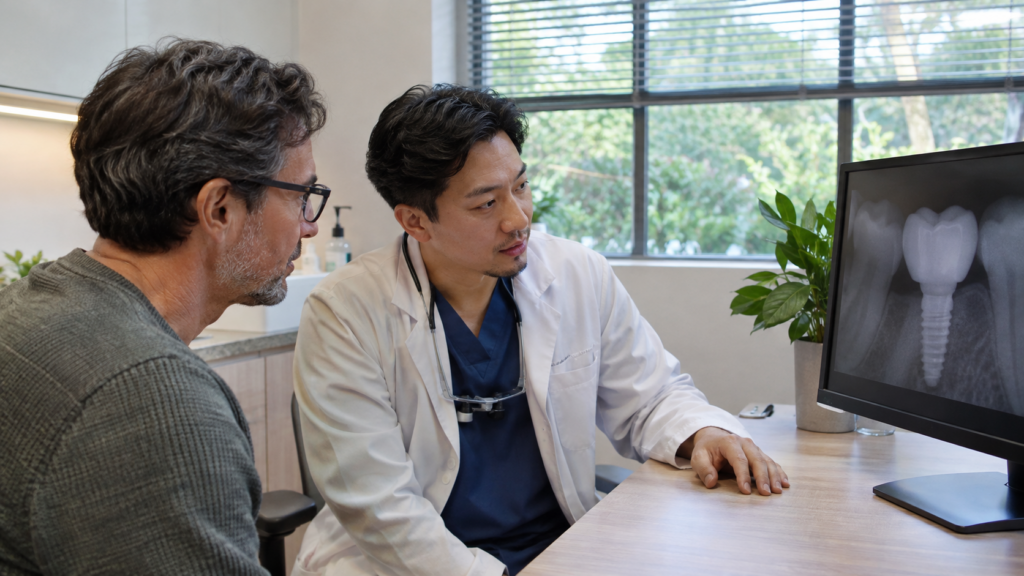
A dentist may check the crown for chips, cracks, or movement, examine the gums around the implant, and see how your teeth meet when you bite. An X-ray may help assess the implant and surrounding bone when appropriate. Which checks are needed depends on what the dentist finds.
| Possible issue | What a dentist may check |
| A connecting screw has loosened. | The dentist may check whether the crown or connector is moving while the implant post stays stable. A cemented crown can still have a screw underneath it, so the way the crown is attached doesn’t settle the question on its own. |
| A cemented crown has lost its hold. | The dentist may check whether the crown has separated from a stable connector and whether both parts are in suitable condition for reuse. |
| The crown is damaged or the bite has changed. | A chip or worn area can change how the crown feels, even if it isn’t moving. The dentist can check the crown’s surface and how it contacts the opposing teeth. |
| The implant post itself may be moving. | The dentist may check stability and look for changes in the gums or supporting bone. Suspected movement of the post needs further evaluation and may require referral. |
Sometimes the dentist can see the crown move but still needs to check the connection beneath it. An X-ray can show how the parts sit together and what the surrounding bone looks like. It doesn’t replace the hands-on check for movement. If the implant system isn’t clear, identifying it may be part of deciding what can be repaired.
If the crown has come loose before, say so at the exam. The dentist may look beyond the immediate problem and check whether the way your teeth meet, wear on the crown, or signs of grinding could be contributing. Finding a loose part doesn’t always explain why it loosened.
Can a Loose Implant Crown Be Repaired?
A loose implant crown doesn’t always need to be replaced. If the implant is stable and a connecting screw is the issue, a dentist may be able to tighten or replace the screw. If the cement bond has failed and the crown and connector are suitable for reuse, recementing may be an option. A damaged crown may need repair or replacement depending on where and how it broke.
The repair and timing depend on what the exam shows, the type of implant connection, and the condition of the parts. If the post itself may be moving, tightening or recementing the crown won’t address that concern. Pacific Dental Center provides implant restoration services for existing implants, including evaluation and implant crown repair or replacement when appropriate.
Before you leave, ask which part was loose, whether any work is still needed, and when you can chew on that side again. If the crown couldn’t be repaired at that visit, ask what to do until the next appointment and whom to call if it shifts or comes off.
How Can You Care for the Crown After the Visit?
Once the immediate problem has been addressed, ask how to clean around the crown and what to watch for between visits. Daily cleaning helps keep the surrounding gums healthy. At regular dental exams, the dentist can check the crown, bite, and gums for changes. If grinding or clenching is a concern, ask whether a custom night guard is appropriate for you.
If you notice movement again, or the crown starts to feel different when you bite, call the dental office promptly. Knowing when the change started and whether the same thing happened before can help guide the next evaluation.
Call Pacific Dental Center at (636) 257-3997 to arrange an evaluation for a loose implant crown in Pacific, MO.


